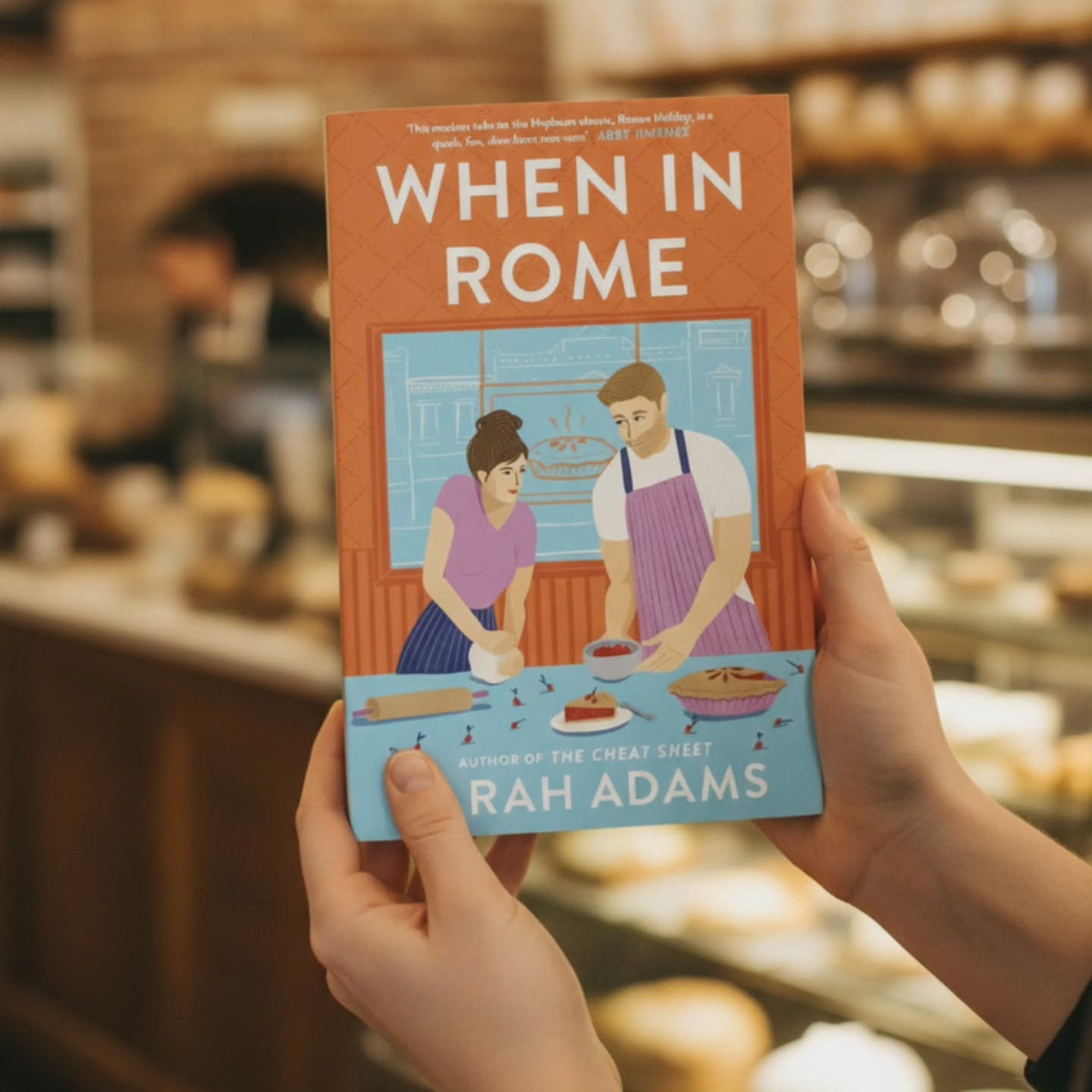
When in Rome
-------------------------------------
Author: Sarah Adams
Published: 2021
Genre: Romance
-------------------------------------
IBC Editorial Rating: 4/5
This book is handpicked by the IBC Editorial Team. If you are an author, publisher, or reader and would like to have a book reviewed by IBC, you may reach us at editorial@indianbookclub.com — we’ll be happy to review it.
-------------------------------------
Editorial Review:
Sarah Adams' When in Rome delivers a contemporary romance that trades Hollywood glamour for small-town Kentucky charm, crafting a love story as comforting as fresh-baked pie. Pop sensation Amelia Rose—known to millions as Rae Rose—reaches her breaking point after years of maintaining an exhausting public persona. Inspired by Audrey Hepburn's escape in Roman Holiday, she flees into the night, only to find herself stranded in Rome, Kentucky, rather than its Italian namesake. When her car breaks down on Noah Walker's lawn, the grumpy pie shop owner reluctantly offers temporary refuge, making clear he has no patience for celebrity drama. As Amelia discovers the appeal of ordinary life and Noah glimpses the genuine person behind the pop star facade, their connection deepens into something neither planned for but both desperately need. Adams constructs a romance that celebrates authenticity over image and community over isolation, wrapped in the warmth of small-town hospitality.
-------------------------------------
Book Summary:
Amelia Rose, a pop star feeling suffocated by fame, makes an impulsive escape from her meticulously managed life as Rae Rose. Inspired by Roman Holiday, she seeks authenticity and breathing room but ends up stranded in Rome, Kentucky, when her car breaks down. She lands on the lawn of Noah Walker, a grumpy pie shop owner devoted to routine and privacy, who reluctantly agrees to let her stay in his guest room despite his skepticism about celebrities and desire to avoid complications. As Amelia settles into small-town life, she reveals her authentic self—kindhearted, goofy, and starved for genuine connection beyond the manufactured persona her career demands. Noah begins recognizing the vulnerable person beneath the pop star image, and his protective instincts conflict with his determination to maintain emotional distance. The novel develops their slow-burning romance through shared meals, interactions with meddling neighbors, and deepening conversations as both characters lower their defenses. Rome, Kentucky, becomes integral to the story, offering Amelia the community, authenticity, and freedom to be imperfect that her celebrity life has denied her. The central tension emerges from their incompatible worlds: Amelia's career demands a return to touring and the celebrity machine, while Noah's identity centers on his small-town life and his grandmother's pie shop. Unlike the film that inspired her escape, Amelia faces a genuine choice between her established career and the person she's discovering she wants to be. The novel explores whether authentic love can survive celebrity's pressures and what sacrifices each character will make, delivering a resolution that honors both romance genre expectations and the story's themes of authenticity and choosing a life that serves one's genuine self.
-------------------------------------
Key Takeaways:
- "Authenticity Versus Performance in Public Life": Adams examines how constant public scrutiny and the pressure to maintain a marketable image can alienate individuals from their genuine selves. The novel suggests that celebrity success often requires sacrificing authenticity, and that reclaiming one's true identity demands conscious resistance to external expectations. - "The Value of Ordinary Experience": Through Amelia's discovery of small-town life, Adams celebrates experiences that consumer culture and celebrity worship dismiss as mundane or insufficient. The narrative argues that making terrible pancakes, knowing your neighbors, and living without constant documentation can provide fulfillment that fame and wealth cannot. - "Vulnerability as Strength in Relationships": Both protagonists must learn that protecting themselves from potential hurt also prevents genuine connection and growth. Adams demonstrates that opening one's heart despite past pain represents courage rather than weakness, and that risk is inherent to meaningful relationships. - "Community as Antidote to Isolation": The novel contrasts celebrity isolation—being constantly visible yet rarely truly known—with small-town community where genuine relationships develop through consistent, authentic interaction. Adams suggests that belonging comes from being seen as a whole person rather than a public image. - "Redefining Success on Personal Terms": Amelia's journey involves questioning whether career achievement as defined by external metrics (fame, wealth, chart positions) aligns with internal measures of fulfillment and happiness. The novel encourages readers to evaluate whether their pursuits serve their authentic desires or merely meet others' expectations.
-------------------------------------
Iconic Lines, Scenes & Characters:
- "The Roman Holiday Inspiration": Adams' direct reference to the Audrey Hepburn classic establishes both her novel's romantic lineage and its central premise of temporary escape from obligation. This framing invites readers to consider how her contemporary version both honors and departs from the source material's inevitability of return to duty. - "Noah's Pie Shop as Sanctuary": The business Noah inherited from his grandmother represents continuity, tradition, and the values that anchor his life, making it symbolically significant beyond its function as a workplace. The pie shop becomes the physical space where the community gathers and where Amelia can experience normalcy. - "The Terrible Pancakes": Amelia's inability to make decent pancakes serves as both comic relief and a symbol of her inexperience with ordinary domestic life. This detail humanizes her celebrity and demonstrates that competence in one arena (performing for millions) doesn't translate into basic life skills that fame has allowed her to avoid developing. - "Noah's Relationship with His Sisters": The protective, caring dynamic he shares with his sisters reveals the emotional capacity he carefully guards in romantic contexts. These relationships demonstrate that his grumpiness is defensive rather than inherent, and that he's capable of the vulnerability and care Amelia needs. - "The Meddling but Lovable Neighbors": Adams populates Rome, Kentucky, with townspeople who embody the small-town community's best qualities—care, nosiness, and genuine investment in others' well-being. These supporting characters provide both comic elements and demonstrate the appeal of living where people know and care about you. - "The Grumpy-Sunshine Dynamic": Noah and Amelia's contrasting temperaments create romantic chemistry while also representing their different life experiences—his protective cynicism versus her maintained optimism despite celebrity pressures. Their balance demonstrates how opposites can complement rather than simply conflict. - "The 'To Me, You're Amelia' Declaration": Noah's recognition of the person beneath the pop star persona, valuing her authentic self over her celebrity identity, encapsulates the novel's central romantic appeal. This moment validates Amelia's desire to be seen and loved for who she genuinely is rather than what she performs.
-------------------------------------
Who Should Read This:
When in Rome is ideal for readers seeking a feel-good contemporary romance that prioritizes emotional comfort and optimism over intense drama. If you appreciate the grumpy-sunshine trope—where opposite temperaments create both friction and complementary balance—you'll find Adams executes it with charm and authenticity. This novel rewards those who value character-driven romance over plot complexity, as the pleasure derives primarily from watching Noah and Amelia's relationship develop rather than from external conflict or dramatic complications. Small-town romance fans will enjoy Rome, Kentucky, rendered with warmth and quirky charm, populated by supporting characters who enhance rather than distract from the central love story. Readers who enjoyed Emily Henry's small-town settings or Christina Lauren's contemporary romances will recognize similar tonal qualities—optimistic, character-focused, and emotionally satisfying without requiring intense angst or trauma. Those drawn to celebrity romance narratives will appreciate Adams' examination of the gap between public image and private reality, treating fame as both isolating and constraining while offering wish fulfillment through Amelia's escape. If you're interested in stories where characters question career success and redefine personal fulfillment, you'll find thematic depth beneath the romance. Readers who prefer closed-door or low-heat romance will appreciate Adams' approach. The novel focuses on emotional intimacy, romantic tension, and genuine connection rather than explicit physical scenes. If you prioritize flirtation, longing, and the anticipation of intimacy over detailed consummation, this book is for you—though readers seeking steamier content may find it too reserved. However, calibrate your expectations appropriately. We describe the book as "cozy," a "warm hug," and "feel-good"—terms signaling comfort reading rather than challenging emotional experiences. If you're seeking romance with substantial external conflict, high stakes, or significant obstacles beyond emotional barriers, you may find the narrative too gentle. The primary tension derives from internal character growth and logistical incompatibility rather than dramatic events. The slow-burning pacing builds satisfying anticipation for some but may frustrate readers preferring faster relationship progression. Adams' writing style is praised as "lucid" and immersive, with accessible prose that prioritizes clarity and emotional resonance over stylistic complexity. She works comfortably within contemporary romance conventions rather than offering experimental techniques. When in Rome speaks most powerfully to readers seeking emotional refuge in romance that celebrates ordinary joys, genuine connection, and choosing authenticity over external validation. It's for those who understand that choosing a quieter, simpler life can be radical, and that real love requires seeing someone's authentic self rather than their performed image. If you need a "warm hug" of a book that will "leave you smiling," this delivers comfort, charm, and the satisfying certainty that love can bridge incompatible worlds.
************************
IBC Editorial Note:
This review is part of the Indian Book Club’s editorial initiative to spotlight books that inspire, inform, and leave a lasting impact on readers. Every title featured is carefully handpicked and reviewed by the IBC Editorial Team to maintain quality, authenticity, and literary value. If you are an author, publisher, or reader and would like to submit a book for review, we’d be delighted to hear from you. Please write to us at: editorial@indianbookclub.com Our team personally evaluates each submission, and selected books are featured as official IBC Editorial Reviews on our platform.