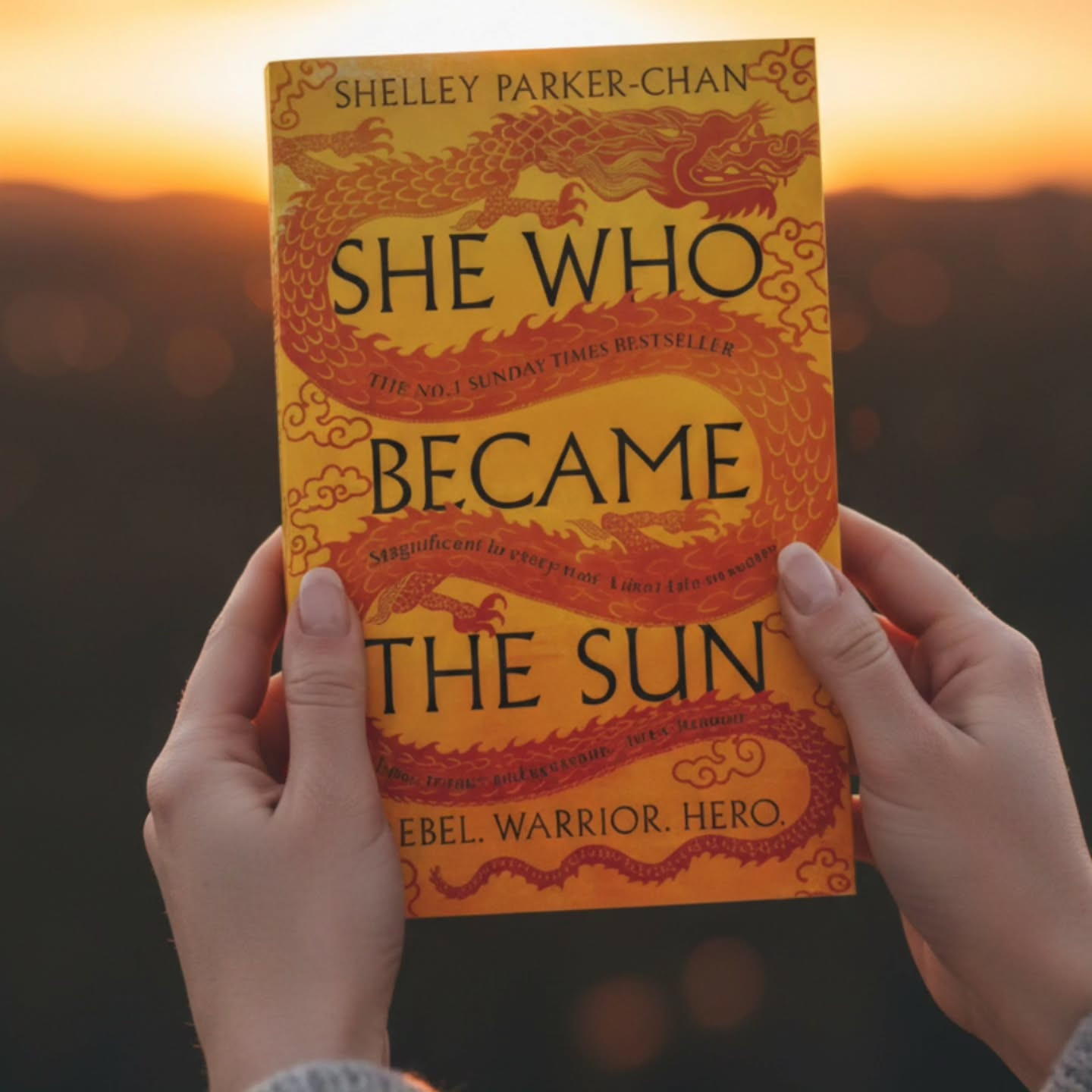
She Who Became the Sun
-------------------------------------
Author: Shelley Parker-Chan
Published: 2021
Genre: HistoricalFiction
-------------------------------------
IBC Editorial Rating: 4.5/5
This book is handpicked by the IBC Editorial Team. If you are an author, publisher, or reader and would like to have a book reviewed by IBC, you may reach us at editorial@indianbookclub.com — we’ll be happy to review it.
-------------------------------------
Editorial Review:
Shelley Parker-Chan's She Who Became the Sun reimagines one of China's most transformative historical periods through a bold act of identity theft and defiance. Set in 1345 during the waning years of Mongol rule, the novel follows a nameless peasant girl who assumes her dead brother's identity—and his prophesied fate of greatness—to escape her own destiny of nothingness. What begins as desperate survival in a Buddhist monastery evolves into a calculated pursuit of power as Zhu Chongba navigates rebellion, warfare, and the precarious performance of masculinity. Parker-Chan crafts a morally complex protagonist whose refusal to accept the limitations placed upon her becomes both her greatest strength and her most dangerous vulnerability in this stunning debut that blends historical authenticity with intimate character study.
-------------------------------------
Book Summary:
The narrative opens in a famine-ravaged village where two Zhu children receive starkly different fates from a fortune-teller: the eighth son will achieve greatness, while the second daughter is destined for nothingness. When bandit violence leaves them orphaned, the supposedly great son dies in despair, while his nameless sister makes an audacious choice. Rather than accept her prophesied death, she assumes her brother's name and identity, entering a monastery as the male novice Zhu Chongba. Within the monastery's walls, Zhu discovers that survival demands more than mere disguise. She must constantly perform masculinity while developing the ruthless pragmatism necessary to protect her secret. As she studies Buddhist teachings and observes the political currents flowing through the monastery, Zhu realizes that her desire to live has transformed into something more dangerous: ambition. The girl who once sought only to escape nothingness begins to hunger for the greatness her brother abandoned. When the monastery is destroyed for its support of rebel forces opposing Mongol rule, Zhu sees opportunity in catastrophe. She joins the burgeoning rebellion, rising through military ranks while concealing her true identity from comrades and enemies alike. Parker-Chan introduces a parallel narrative through General Ouyang, a eunuch serving the Mongol prince Esen despite harboring deep hatred for his masters. Ouyang's quest for vengeance mirrors Zhu's pursuit of greatness, creating a dynamic where both characters operate within systems that deny their full humanity. The novel follows Zhu's strategic maneuvering through rebel politics, military campaigns, and personal relationships that threaten to expose her secret. Her connection with Ma Xiuying, the daughter of a rebel leader, introduces romantic complications and highlights the painful gap between Zhu's performed identity and hidden self. As battles escalate and political alliances shift, Zhu must make increasingly difficult moral compromises, sacrificing ideals, relationships, and innocence to claim the mandate she believes should be hers. Parker-Chan grounds her narrative in meticulous historical research while exploring timeless questions about identity, ambition, and the price of refusing one's assigned place in society. The novel builds toward a climax that positions Zhu for even greater conflict, setting the stage for the duology's conclusion while leaving readers to contemplate whether stolen greatness can ever truly belong to the thief.
-------------------------------------
Key Takeaways:
- "The Struggle Against Predetermined Destiny": The novel's central tension revolves around Zhu's refusal to accept her fate of nothingness, interrogating whether destiny is immutable or can be seized through sheer force of will. Parker-Chan suggests that claiming an unauthorized future requires not just courage but a willingness to fundamentally remake oneself. - "Identity as Performance and Truth": Zhu's sustained impersonation of her brother raises profound questions about whether identity is inherent or constructed through consistent performance. The narrative demonstrates that living as someone else long enough can blur the boundaries between disguise and authentic self. - "The Moral Cost of Ambition": Parker-Chan unflinchingly examines what individuals sacrifice—compassion, integrity, relationships—in pursuit of goals that seem to justify any means. Zhu's journey forces readers to confront uncomfortable questions about whether greatness achieved through callousness retains its value. - "Gender as Power Structure": By requiring Zhu to inhabit masculinity to access power, the novel illuminates how patriarchal systems deny women agency and recognition regardless of capability. The narrative explores both the necessity and the psychological toll of operating within oppressive structures while secretly subverting them. - "Desire and Queerness in Constrained Contexts": Zhu's same-sex attraction and the complexity of pursuing intimacy while maintaining a false identity add layers of emotional resonance to her journey. Parker-Chan treats queer desire as an undeniable truth that persists despite—and sometimes because of—the necessity for concealment. - "The Unglamorous Reality of Power": The novel strips away romantic notions of military glory and political leadership, presenting both as arenas of brutal compromise and dehumanizing violence. Zhu's rise demonstrates that power is often claimed through acts that contradict heroic ideals.
-------------------------------------
Iconic Lines, Scenes & Characters:
- "Zhu's Assumption of Her Brother's Identity": The moment when the nameless girl chooses her brother's fate over her own death establishes the moral ambiguity that defines the entire narrative. This decision transforms her from a passive victim into an active agent of her own destiny. - "General Ouyang as Dark Reflection: The eunuch general serving enemies he despises provides a powerful parallel to Zhu's journey, embodying what happens when survival becomes indistinguishable from vengeance. His character demonstrates how trauma and systematic oppression can twist noble impulses into self-destructive obsession. - "The Monastery as Liminal Space": Parker-Chan's depiction of the Buddhist sanctuary captures both its protective function and the exhausting vigilance required for Zhu to maintain her disguise. The monastery serves as a crucible where Zhu's capacity for strategic thinking and moral compromise first emerges. - "Ma Xiuying's Defiance of Expectations": Ma's refusal to accept the limited role assigned to women in her society, despite having more privilege than Zhu, demonstrates that the desire for purpose transcends circumstance. Her character illustrates that even those born into relative advantage can chafe against patriarchal constraints. - "The Transformation of 'Nothingness' into Strategy": Zhu's reframing of her prophesied nothingness as invisibility and underestimation turns what was meant as limitation into tactical advantage. This conceptual reversal demonstrates how marginalized individuals can weaponize society's dismissal of them. - "The Unflinching Depiction of Medieval Warfare": Parker-Chan refuses to romanticize battle, presenting combat as chaotic, brutal, and traumatic rather than glorious. These scenes underscore that Zhu's path to greatness is paved with genuine horror rather than heroic triumph.
-------------------------------------
Who Should Read This:
She Who Became the Sun will resonate most powerfully with readers seeking historical fantasy that prioritizes character complexity over straightforward heroism. Those who appreciated the moral ambiguity and historical grounding of R.F. Kuang's The Poppy War or the intimate exploration of identity in Madeline Miller's work will find Parker-Chan's debut equally compelling. The novel particularly rewards readers interested in how marginalized individuals navigate oppressive systems while pursuing unauthorized ambitions. Fans of historical fiction grounded in meticulous research will appreciate Parker-Chan's recreation of late Yuan Dynasty China and the rebel movements that eventually established the Ming Dynasty. The narrative balances sweeping political intrigue with intimate character moments, making it ideal for readers who want epic scope without sacrificing emotional depth. Those drawn to stories of queer identity, gender performance, and the ways desire persists despite social prohibition will find these themes woven throughout rather than relegated to subplot status. Readers who enjoy morally complex protagonists willing to make questionable choices will find Zhu Chongba a fascinating narrator whose decisions resist easy judgment. The novel asks difficult questions about whether survival justifies moral compromise and whether greatness achieved through callousness retains its meaning. Those seeking uncomplicated heroes or straightforward narratives of triumph may find Zhu's ruthless pragmatism difficult to reconcile with traditional protagonist expectations. However, prospective readers should be aware that the novel does not shy from depicting violence, sexual assault, and the psychological trauma of living under constant threat of discovery. The emotional intensity and morally grey terrain may not suit those who prefer lighter fantasy fare or clear distinctions between heroism and villainy. Additionally, while LGBTQ+ themes are integral to the narrative's thematic richness, readers uncomfortable with queer relationships or gender nonconformity may struggle with central elements of Zhu's journey. She Who Became the Sun speaks most compellingly to readers who understand that the most revolutionary act is often simply refusing to accept the limitations others have imposed on your existence. It is a novel for those who recognize that greatness and goodness are not synonymous, and that sometimes claiming your right to matter requires becoming someone you might not entirely recognize. Parker-Chan has crafted a debut that challenges readers to consider what they would sacrifice to escape their own version of nothingness and whether such an escape is worth the cost of becoming unrecognizable to themselves.
************************
IBC Editorial Note:
This review is part of the Indian Book Club’s editorial initiative to spotlight books that inspire, inform, and leave a lasting impact on readers. Every title featured is carefully handpicked and reviewed by the IBC Editorial Team to maintain quality, authenticity, and literary value. If you are an author, publisher, or reader and would like to submit a book for review, we’d be delighted to hear from you. Please write to us at: editorial@indianbookclub.com Our team personally evaluates each submission, and selected books are featured as official IBC Editorial Reviews on our platform.