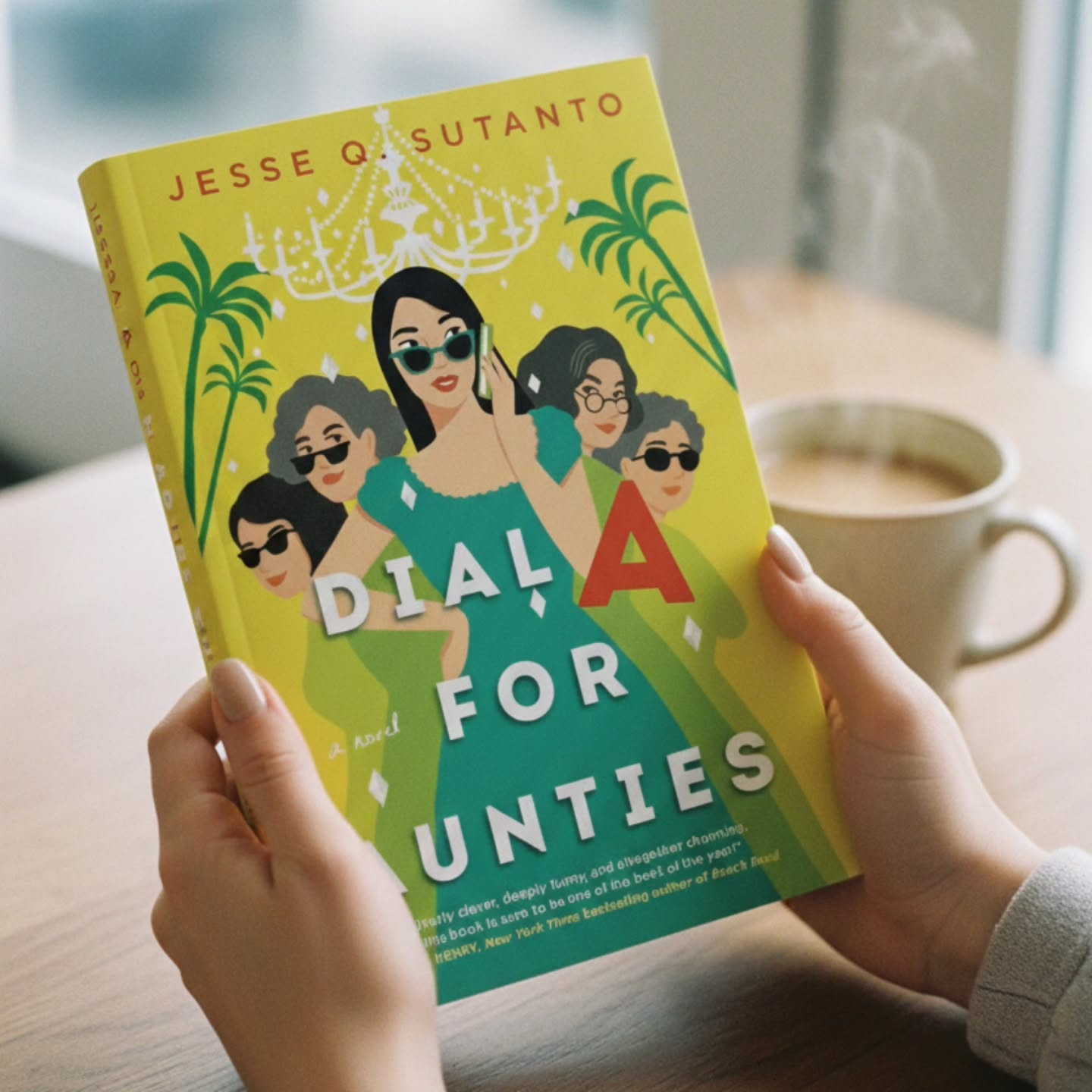
Dial A for Aunties
-------------------------------------
Author: Jesse Q. Sutanto
Published: 2020
Genre: Romance
-------------------------------------
IBC Editorial Rating: 4/5
This book is handpicked by the IBC Editorial Team. If you are an author, publisher, or reader and would like to have a book reviewed by IBC, you may reach us at editorial@indianbookclub.com — we’ll be happy to review it.
-------------------------------------
Editorial Review:
When family loyalty collides with accidental homicide, chaos becomes comedy in Jesse Q. Sutanto's Dial A for Aunties. This irresistible debut blends romantic comedy with cozy mystery, following Meddelin Chan as she navigates the aftermath of an accidental killing—with her overbearing mother and quartet of meddling aunties as accomplices. Set against the backdrop of a lavish billionaire wedding at a California coastal resort, this novel celebrates Chinese-Indonesian immigrant culture while delivering sharp wit, slapstick hijinks, and genuine heart. Equal parts murder farce and family drama, Sutanto's narrative asks: What wouldn't you do for family? The answer, apparently, includes body disposal, wedding cake subterfuge, and facing your greatest romantic regret—all before the champagne toast.
-------------------------------------
Book Summary:
Meddelin "Meddy" Chan's disastrous blind date takes a fatal turn when her overly aggressive companion dies accidentally in her apartment. Panicked and uncertain, she does what any dutiful daughter would do: calls her mother. What follows is a masterclass in familial chaos as Ma immediately summons the cavalry—Meddy's four indomitable aunties, who run the family's wedding catering business with iron fists and hearts of gold. The aunties devise a plan to dispose of the inconvenient corpse, but their scheme goes spectacularly awry when the body ends up sealed inside a commercial cake cooler. That same cooler is then inadvertently transported to the Chan family's most prestigious assignment yet: catering an extravagant wedding for tech billionaires at an exclusive island resort off the California coast. The family's business motto—"Don't leave your big day to chance, leave it to the Chans!"—has never been tested quite like this. As Meddy and her relatives scramble to locate and relocate the body without arousing suspicion, the stakes escalate dramatically. The wedding venue crawls with guests, vendors, and one particularly observant police officer investigating a missing person case. That officer happens to be Nathan, a charming lawman who takes an immediate interest in Meddy—though whether it's romantic or professional remains dangerously unclear. Complications multiply when Meddy's college sweetheart appears unexpectedly among the wedding party. Their relationship ended in heartbreak years ago, leaving wounds that never fully healed. Now, amid the elaborate floral arrangements and buttercream masterpieces her aunties are creating, Meddy must confront unresolved feelings while keeping her family's criminal activities concealed. The narrative unfolds as a delicious blend of farce and cultural celebration. Sutanto expertly balances multiple plot threads—the body disposal mission, budding romance with Nathan, rekindled feelings for her ex, and the family's determination to execute a flawless wedding—while maintaining breakneck pacing. The aunties, each with distinct personalities ranging from stern disciplinarian to conspiracy theorist, provide constant comedic relief through their bickering, elaborate schemes, and unwavering conviction that family comes first, evidence disposal second, and everything else distant third. As the weekend progresses, Meddy finds herself juggling increasingly absurd situations: hiding from investigators, navigating romantic entanglements, executing complex catering logistics, and preventing her aunties from making everything exponentially worse with their well-intentioned interference. The question becomes whether she can survive the weekend with her freedom, heart, and family business intact—or whether one perfect wedding will become the scene of multiple crimes.
-------------------------------------
Key Takeaways:
- "Family Loyalty Above Al"l: The novel explores the fierce, sometimes irrational bonds of immigrant families, where protecting one another supersedes conventional morality. The aunties' immediate, unquestioning willingness to help Meddy dispose of a body illustrates how family obligation operates as the ultimate organizing principle in their lives—a cultural value that transcends legal and ethical boundaries. - "Cultural Identity and Generational Tension": Sutanto authentically portrays the Chinese-Indonesian immigrant experience, highlighting the tension between Old World expectations and American independence. Meddy constantly negotiates between honoring her mother's traditional values and asserting her own autonomy, a struggle familiar to many first-generation Americans. - "The Burden of Perfection": The relentless pursuit of the "perfect wedding" serves as metaphor for immigrant striving—the pressure to succeed visibly and spectacularly in their adopted country. The aunties' obsession with flawless execution, even while managing a corpse crisis, reflects deeper anxieties about reputation, legitimacy, and proving their worth. - "Second Chances and Growth": Both romantic subplots explore themes of maturity, forgiveness, and whether past mistakes can be overcome. Meddy's journey involves learning to make decisions for herself rather than reflexively pleasing others—a coming-of-age arc accelerated by extreme circumstances. - "Humor as Survival Mechanism": The novel demonstrates how comedy can diffuse even the darkest situations, transforming potential tragedy into absurdist adventure. The family's ability to find laughter amid disaster becomes their greatest survival tool.
-------------------------------------
Iconic Lines, Scenes & Characters:
- "The Aunties as Force of Nature": The four aunties—Big Aunt, Second Aunt, Third Aunt, and Fourth Aunt—function almost as a single entity, finishing each other's sentences and operating with hive-mind efficiency. Their distinct personalities create a perfect comedic ensemble: the authoritarian matriarch, the superstitious worrier, the practical problem-solver, and the conspiracy theorist. Their group dynamics generate the novel's most hilarious exchanges. - "The Cake Cooler Catastrophe": The central comedic set piece—accidentally shipping a corpse to a wedding in catering equipment—epitomizes the novel's talent for escalating absurdity. Every subsequent scene involving the cooler ratchets up the tension while maintaining laugh-out-loud humor, as the family desperately tries to retrieve it without arousing suspicion. - "Meddy's Relatable Anxiety": The protagonist's constant internal monologue of worst-case scenarios and people-pleasing instincts makes her deeply sympathetic. Her inability to say "no" to her family, even when they're asking her to commit felonies, captures something universally recognizable about familial guilt and obligation. - "Cultural Details as Character": Sutanto's incorporation of Singaporean-Indonesian cuisine, language, and customs enriches the narrative immeasurably. References to specific dishes, untranslatable phrases, and cultural practices create authenticity without requiring translation or explanation, trusting readers to embrace unfamiliar elements. - "Nathan's Investigation": The romantic subplot with the police officer investigating the dead man's disappearance creates delicious tension. Every flirtatious exchange carries undertones of danger, as Meddy simultaneously falls for him and fears he'll discover her involvement. - "The Ex-Boyfriend Reunion": The unexpected reappearance of Meddy's college love introduces genuine emotional complexity. Their history—revealed gradually through flashbacks—adds depth to what might otherwise remain pure farce, grounding the comedy in authentic heartbreak.
-------------------------------------
Who Should Read This:
This novel will particularly resonate with readers who appreciate romantic comedies with substance and cultural specificity. Fans of Kevin Kwan's Crazy Rich Asians will recognise the blend of rom-com tropes and authentic Asian family dynamics, while mystery enthusiasts seeking lighter fare will enjoy the cosy crime elements without heavy violence or dark themes. First-generation Americans and children of immigrants will find Meddy's struggles with family expectations painfully familiar, making this an especially meaningful read for those navigating dual cultural identities. The novel also appeals to anyone who has experienced overbearing but loving relatives—the specificity of Chinese-Indonesian culture provides the setting, but the emotional truths transcend ethnic boundaries. Readers seeking diverse representation in commercial fiction should prioritize this title. Sutanto centers Asian characters without making their ethnicity the "issue" of the book—they simply exist, fully realized and complex, in a story that could only be told through their specific cultural lens. Those in need of pure escapist entertainment will find Dial A for Aunties ideal. The audiobook version, as noted, enhances the experience through vocal performance that brings the aunties' distinct personalities to vivid life. This is beach reading with depth, airplane entertainment with heart—perfect for anyone seeking laughter without sacrificing intelligence or emotional resonance. However, readers preferring realistic crime fiction, dark psychological thrillers, or serious literary fiction should look elsewhere. The novel's tone remains consistently light despite the body-disposal premise, prioritizing comedy over suspense. Those uncomfortable with moral ambiguity around crime—even accidental, victimless crime—may struggle with the premise. Ultimately, this book rewards readers willing to embrace farce, celebrate chaotic families, and accept that sometimes love and loyalty matter more than strict legality. It's for anyone who has ever thought, "My family is crazy"—and meant it as both complaint and compliment.
************************
IBC Editorial Note:
This review is part of the Indian Book Club’s editorial initiative to spotlight books that inspire, inform, and leave a lasting impact on readers. Every title featured is carefully handpicked and reviewed by the IBC Editorial Team to maintain quality, authenticity, and literary value. If you are an author, publisher, or reader and would like to submit a book for review, we’d be delighted to hear from you. Please write to us at: editorial@indianbookclub.com Our team personally evaluates each submission, and selected books are featured as official IBC Editorial Reviews on our platform.