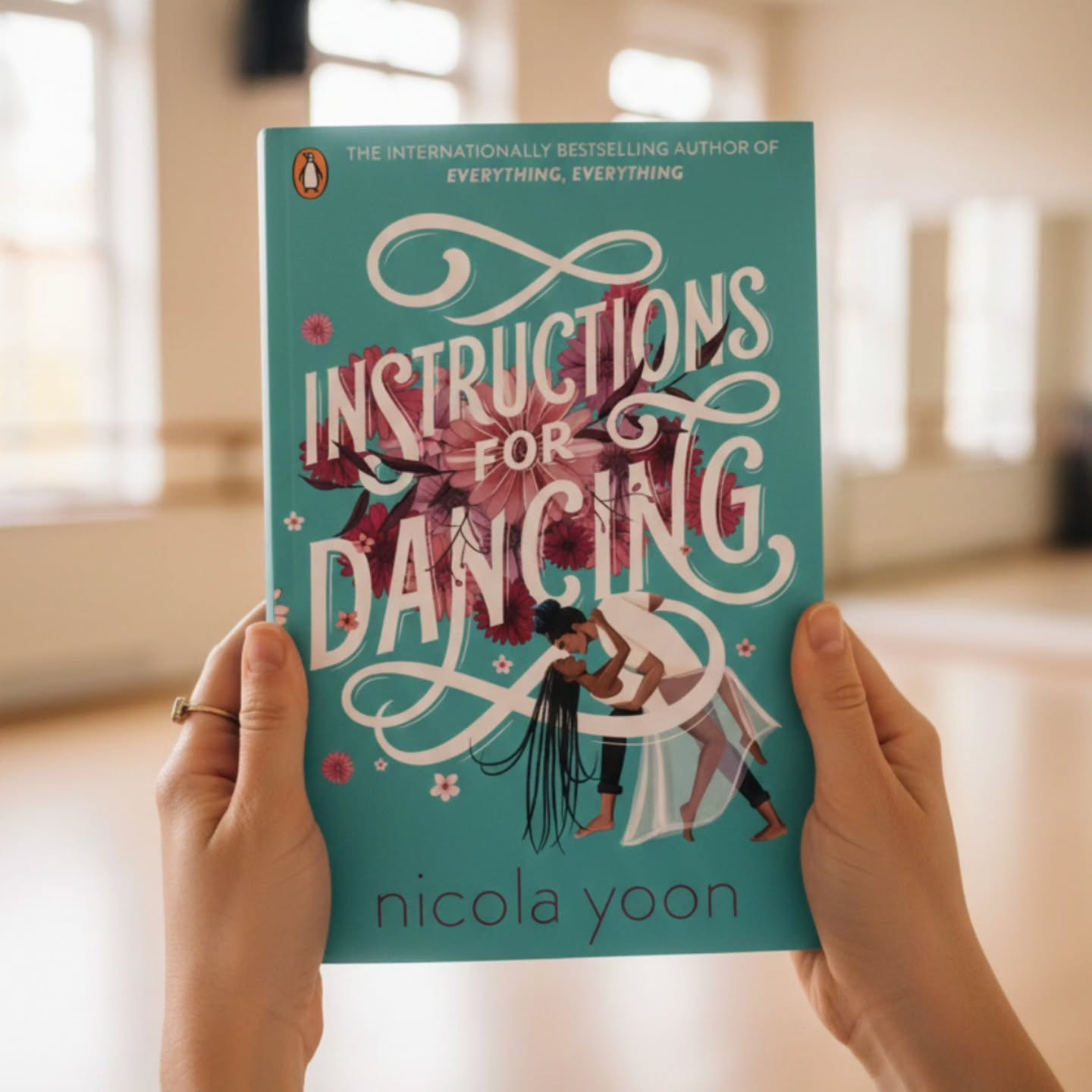
Instructions for Dancing
-------------------------------------
Author: Nicola Yoon
Published: 2020
Genre: YoungAdult(YA)
-------------------------------------
IBC Editorial Rating: 4.5/5
This book is handpicked by the IBC Editorial Team. If you are an author, publisher, or reader and would like to have a book reviewed by IBC, you may reach us at editorial@indianbookclub.com — we’ll be happy to review it.
-------------------------------------
Editorial Review:
When Evie witnesses a forbidden kiss, she's cursed with a devastating gift: visions of how every romance begins—and how it ends in heartbreak. Convinced that love only leads to ruin, she vows to protect her heart at all costs. Then she meets X, a whirlwind of spontaneity who says yes to everything, including partnering with a cynical girl for a ballroom competition she has no business entering. As they spin across the dance floor, Evie feels herself falling despite the visions screaming warnings with every touch. She's seen countless love stories crumble. She knows how this ends. But X makes her wonder: what if some risks are worth taking? What if her story could be the exception? A sweeping romance about fate, choice, and daring to believe in love when you've seen every reason not to.
-------------------------------------
Book Summary:
Evie Thomas has sworn off love. After discovering her father's infidelity shattered her parents' seemingly perfect marriage, she's become convinced that romantic love is nothing but an illusion destined to end in heartbreak. She takes down the romance novels that once lined her bedroom walls and replaces them with cynicism, determined never to fall for love's lies. But everything changes when she discovers a mysterious book—Instructions for Dancing by La Amante—tucked inside a used dust jacket at a local bookstore. Upon opening the book, Evie develops an inexplicable supernatural ability: whenever she witnesses two people in love touch, she's thrust into vivid visions of their entire relationship—from the electric first spark of connection to the inevitable, often painful ending. Unable to control this power, Evie becomes an unwilling observer of love's complete lifecycle, witnessing both its transcendent highs and devastating lows. The experience only reinforces her belief that love isn't worth the guaranteed pain. The enigmatic book contains only one actual instruction: to visit a specific dance studio. There, Evie meets X, a charming dance instructor who becomes both her dance partner and an unexpected friend. As Evie reluctantly learns to salsa, she's forced to confront her assumptions about connection, vulnerability, and risk. Through her visions, she witnesses that while every relationship she sees does eventually end, the joy, growth, and profound meaning people experience along the way has genuine value. The endings don't erase what came before. Simultaneously, Evie must navigate her fractured family relationships. Her relationship with her heartbroken mother is strained, her younger sister Danica feels distant, and her father's betrayal continues to poison her worldview. As she processes these complicated family dynamics alongside her supernatural insights into romance, Evie begins understanding that love—romantic or otherwise—exists in shades of gray rather than the black-and-white certainty she'd imposed. Yoon crafts a narrative that asks profound questions: If you knew love would end in heartbreak, would it still be worth experiencing? Can foreknowledge of pain coexist with genuine joy? Through Evie's journey, the novel argues that impermanence doesn't invalidate meaning—that the courage to love despite inevitable loss is what makes us fully human. The magical realism serves as metaphor for the wisdom we gain through observation and lived experience, showing that maturity comes from accepting complexity rather than seeking simple answers. Ultimately, Evie learns that closing herself off guarantees only one thing: missing out on life's most transformative experiences, however temporary they may be.
-------------------------------------
Key Takeaways:
1. The Value of Impermanence - The novel's central argument is that love's temporary nature doesn't diminish its worth. Through Evie's visions of relationships that all eventually end, Yoon challenges the notion that only permanent things have value. The story suggests that the depth of connection, growth, and joy experienced during a relationship matters more than whether it lasts forever—that impermanence is an inherent part of life's beauty rather than a flaw that invalidates meaning. 2. Choosing Vulnerability Despite Guaranteed Pain - Evie's journey explores the courage required to remain open to love when heartbreak is inevitable. The book examines whether knowing the ending changes the value of the journey, ultimately arguing that protecting yourself from potential pain also means denying yourself transformative experiences. True bravery lies not in avoiding hurt, but in choosing connection despite understanding its risks. 3. Moving Beyond Cynicism to Complexity - The narrative tracks Evie's evolution from black-and-white thinking (love is either perfect or worthless) to embracing nuance. Yoon demonstrates that maturity means accepting contradictions—that her parents' love was once real even though it ended, that her father can be both loving and flawed, and that joy and sorrow can coexist within the same relationship. 4. Family Bonds and Forgiveness - Beyond romance, the book emphasizes that love manifests in multiple forms. Evie's healing involves repairing relationships with her mother, reconnecting with her sister, and finding peace with her father's imperfections. Forgiveness doesn't mean condoning harm but rather releasing the grip of past pain to move forward. 5. Living Fully in the Present - Ultimately, Instructions for Dancing advocates for presence over prediction, arguing that obsessing over inevitable endings prevents us from fully experiencing the present moment's gifts.
-------------------------------------
Iconic Lines, Scenes & Characters:
The First Vision - The moment Evie first experiences her supernatural ability is both disorienting and unforgettable. When she witnesses a couple touch and is suddenly catapulted through their entire relationship—from euphoric beginnings to painful dissolution—the jarring intimacy of seeing strangers' most private moments establishes the book's emotional stakes. This scene sets up the novel's exploration of whether foreknowledge ruins or enriches experience. The Mysterious Book and La Amante - The enigmatic Instructions for Dancing itself becomes a character—a guide offering not answers but direction. The book's sole instruction leading Evie to the dance studio feels both mystical and purposeful, embodying the idea that sometimes growth requires following inexplicable nudges toward uncomfortable experiences. La Amante remains mysterious throughout, representing the unknown teachers who appear in our lives. X, the Dance Instructor - X serves as Evie's counterbalance—someone who embraces life's uncertainty rather than retreating from it. His warmth, patience, and openness model an alternative to Evie's defensive cynicism. Their dance lessons become metaphors for trust, partnership, and the beauty of synchronized vulnerability. His presence challenges Evie to reconsider whether protecting her heart is actually protecting her at all. The Dance Studio as Sacred Space - The studio represents a threshold between Evie's closed-off world and possibility. Learning to salsa—requiring trust, physical closeness, and surrendering control—mirrors her emotional journey. The act of dancing becomes a meditation on connection, rhythm, and allowing yourself to be moved by another person. Evie's Evolving Relationship with Her Mother - Watching Evie gradually understand her mother not as a victim to be pitied but as a complex woman navigating her own heartbreak adds emotional depth. Their reconciliation demonstrates that witnessing pain doesn't mean fully understanding it until you're ready to truly see the person experiencing it. The Central Paradox - The book's most haunting concept: seeing every ending makes the beginnings more poignant, not less. This philosophical insight—that awareness of mortality and impermanence intensifies rather than diminishes beauty—lingers long after the final page.
-------------------------------------
Who Should Read This:
Young Adults Navigating Heartbreak or Family Turmoil - This book speaks directly to readers processing their own experiences with parental divorce, romantic disappointment, or the shattering of childhood illusions. Evie's journey from cynicism to cautious hope offers validation and a path forward for those who've built walls around their hearts after witnessing love fail. Fans of Magical Realism with Emotional Depth - If you loved The Time Traveler's Wife, The Invisible Life of Addie LaRue, or Nicola Yoon's previous work (The Sun Is Also a Star, Everything, Everything), you'll appreciate how the supernatural element serves emotional truth rather than spectacle. The magic here is a lens for examining real human questions about love, risk, and meaning. Readers Who Enjoy Character-Driven Coming-of-Age Stories - Those who prioritize internal transformation over plot twists will find satisfaction in Evie's gradual evolution. This isn't action-packed; it's introspective, focusing on how we change our minds about life's biggest questions through lived experience and observation. Anyone Questioning Whether Love Is Worth the Risk - If you've ever wondered whether it's safer to avoid deep connection than face inevitable loss, this book engages directly with that question. It's for readers seeking thoughtful exploration of vulnerability, impermanence, and what makes life meaningful despite guaranteed endings. People Who Appreciate Diverse Family Dynamics - The book thoughtfully portrays a Black family navigating complex emotions around betrayal, forgiveness, and reconnection, offering nuanced representation beyond the romance plot.
************************
IBC Editorial Note:
This review is part of the Indian Book Club’s editorial initiative to spotlight books that inspire, inform, and leave a lasting impact on readers. Every title featured is carefully handpicked and reviewed by the IBC Editorial Team to maintain quality, authenticity, and literary value. If you are an author, publisher, or reader and would like to submit a book for review, we’d be delighted to hear from you. Please write to us at: editorial@indianbookclub.com Our team personally evaluates each submission, and selected books are featured as official IBC Editorial Reviews on our platform.